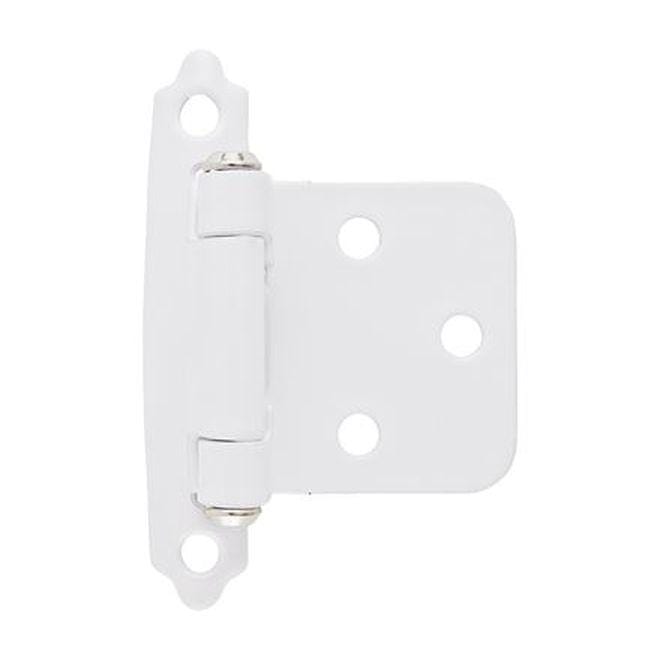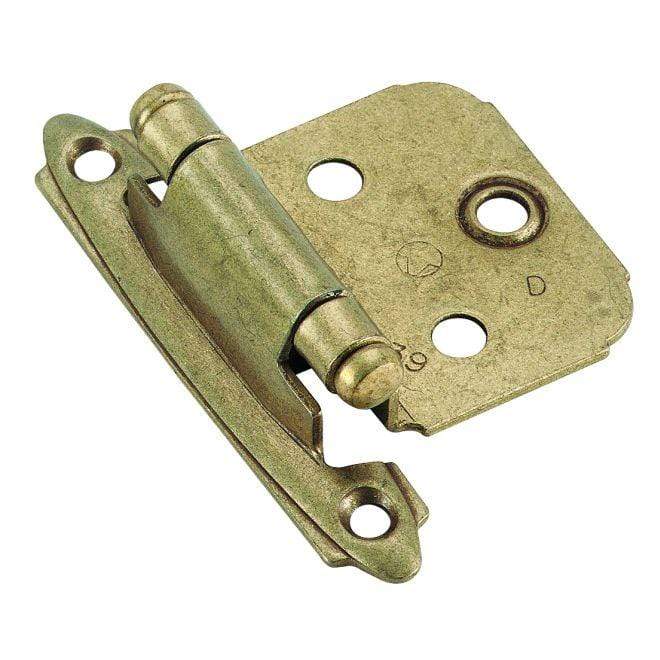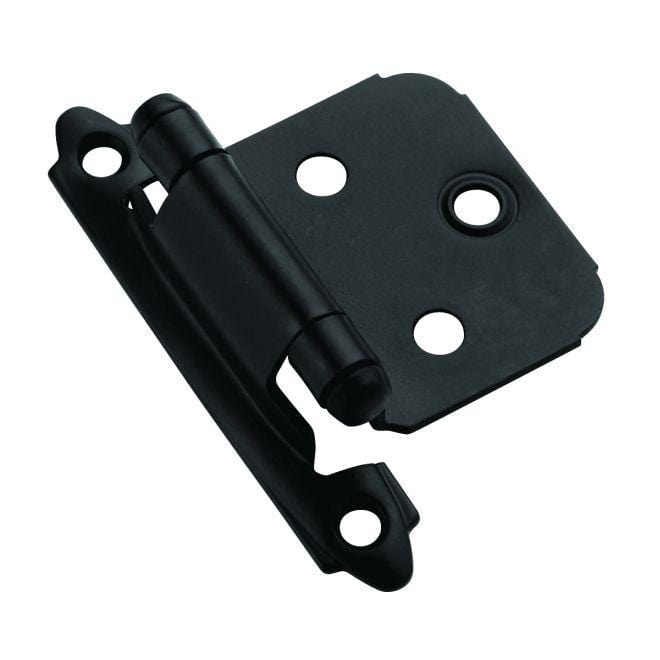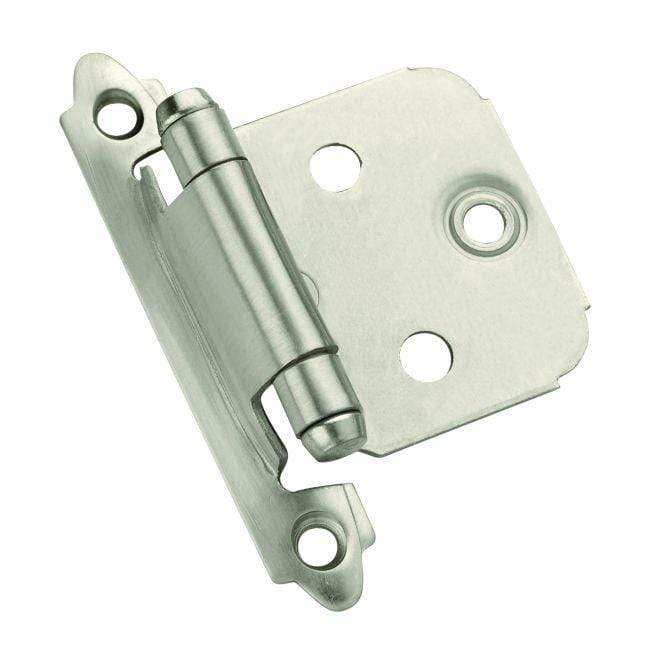


If you're shopping for cabinet hinges, you’ve likely come across the term slide-on hinge. These hinges are a popular choice in both DIY cabinetry and professional woodworking, offering a simple, cost-effective way to attach cabinet doors.
But what exactly is a slide-on hinge, and how does it compare to its clip-on counterpart?
In this guide, we'll break down what a slide-on hinge is, how it works, and when it’s the right choice for your project.
What is a Slide-On Hinge?
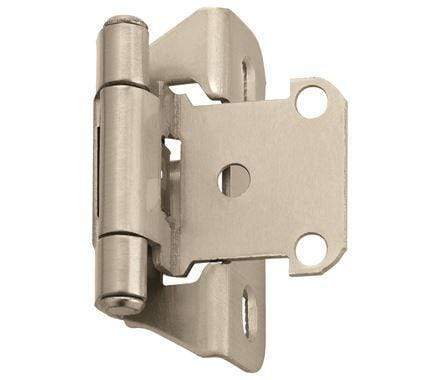
A slide-on hinge is a type of concealed cabinet hinge that connects the door to the cabinet body using a mounting plate and hinge arm.
What makes slide-on hinges unique is how they are attached: the hinge arm slides onto the mounting plate and is then secured using a screw.
This connection creates a secure, stable hinge joint that creates smooth door movement while keeping all hardware hidden when the door is closed.
Because the hinge is mounted inside the cabinet and out of sight, it contributes to a clean design aesthetic, which is especially common in frameless European-style cabinetry.
Slide-on hinges come in various configurations to accommodate different door types and overlays, including:
-
Full overlay hinges, where the door covers the cabinet’s side panel completely.
-
Half overlay hinges, used when two doors share the same cabinet partition.
-
Inset hinges, for doors that sit flush with the cabinet frame.
Some slide-on hinges also offer adjustability features, like cam screws or eccentric cams that let you tweak the door alignment horizontally, vertically, or in depth. While not all slide-on hinges have full 3D adjustment, most offer enough flexibility for fine-tuning the door’s position after installation.
In terms of installation, a slide-on hinge typically requires:
-
A 35mm cup hole drilled into the back of the cabinet door
-
Screws to attach the hinge arm to the door
-
A mounting plate attached to the cabinet wall or frame
After both parts are installed, the hinge arm simply slides onto the plate and is locked in with a screw. It’s a solid and time-tested solution, ideal for projects that don’t need constant hardware removal or reconfiguration.
What is the Difference Between Clip-On and Slide-On Hinges?
Though both slide-on and clip-on hinges fall under the concealed hinge category and may look similar at a glance, they are engineered differently and serve different needs, especially when it comes to installation and long-term use.
Tool-Free Attachment vs. Manual Securing
Clip-on hinges are designed with a spring-loaded mechanism or release clip that allows the hinge arm to quickly snap onto or off the mounting plate without a screwdriver. This feature is handy for professionals or cabinetmakers who need to install or remove doors repeatedly during the assembly process.

Slide-on hinges require you to manually slide the hinge arm over the mounting plate and secure it with a screw. This makes the connection more permanent, which is fine for cabinets that won’t require frequent adjustments.

Convenience and Speed
For large-scale installations—such as kitchens with dozens of cabinet doors—clip-on hinges can save significant time. Their quick-attach design streamlines the process and allows for easier access when painting or transporting doors separately from the cabinets.
Slide-on hinges, while slightly more time-consuming to install, are still relatively straightforward and user-friendly. They may take an extra step or two, but the result is highly functional and secure.
Cost and Availability
Because slide-on hinges have fewer moving parts and a simpler design, they are generally less expensive than clip-on options. This makes them appealing for budget-conscious homeowners, landlords renovating rental properties, or DIYers updating a laundry room or workshop.
Clip-on hinges tend to cost more because of their advanced mechanism, but the added convenience may be worth it for those who expect to remove and reattach doors multiple times.
When Should Slide-On Hinges be Used?
1. DIY or First-Time Cabinet Builds
If you're building your cabinets or replacing old hinges, slide-on hinges are a straightforward solution without the complexity of clip-on hinges. They’re easy to align with basic tools and give you control during installation.
2. Low-Traffic or Static Areas
Cabinets that don’t need frequent maintenance—like those in guest rooms, garages, pantries, or utility rooms—benefit from the “set it and forget it” nature of slide-on hinges. Once they’re installed and adjusted, there’s little reason to remove or modify them.
3. Cost-Sensitive Renovations
Slide-on hinges are a practical choice for projects that need to stretch a budget. Whether you’re outfitting a rental property, flipping a house, or upgrading a secondary kitchen, the savings can add up quickly without sacrificing quality.
4. European-Style Frameless Cabinets
Frameless cabinets often rely on concealed hinges for that uncluttered look. Slide-on hinges integrate well with these designs, offering the same visual benefit as clip-on types but with simpler mechanics.
5. Cabinets That Stay Put
Not every cabinet door needs frequent removal. In kitchens or bathrooms where the cabinetry is permanent and rarely altered, a slide-on hinge does the job without the added cost or complexity of a clip-on mechanism.
6. Custom Storage Projects
Slide-on hinges also work well for built-in bookshelves, entertainment centers, under-stair storage compartments, and other custom storage solutions. Since these pieces typically don’t get much wear and tear, there’s little need for quick-release functionality.
Final Thoughts
Slide-on hinges are a versatile, affordable solution for many cabinet projects. While they may not offer the quick-release convenience of clip-on hinges, their sturdy design and simple installation make them ideal for long-term cabinetry.
Shop Hinge Outlet’s high-quality selection of slide-on hinges and get a jump start on your newest project.